ENTRENCHED attack and defense is the core loop that separates this WW1 Roblox shooter from typical respawn-based shooters, because every round forces one side to push while the other holds ground. Understanding the entrenched attack and defense rules across Frontlines, Conquest, and Domination directly determines whether your squad wins or gets pinned in the mud. This breakdown covers turn-based mechanics, class synergy, and mode-specific strategies so you can pick the right fight every time.
Why ENTRENCHED Attack and Defense Defines the Game
The entire identity of ENTRENCHED revolves around asymmetric combat where attackers and defenders use completely different tactics. While casual shooters let both teams play identically, this game forces you to adapt your loadout, positioning, and pacing based on which role you draw for the round. The official Roblox game page describes the experience as loosely based on early 20th century wars, where the Entente and Central Powers face off in the trenches, which means the entrenched attack and defense dynamic is baked into every match.
The game currently offers nine distinct classes — Rifleman, Assault, Medic, Sniper, Scout, Support, Officer, Flamethrower, and Machine Gunner — and each one performs differently depending on whether you are attacking or defending. A Sniper holding a sightline on defense is invaluable, but the same class can stall an attack if the squad needs aggressive pushes instead. This role asymmetry is why the entrenched attack and defense system feels fresh even after dozens of matches.
Here is what makes the attack-versus-defense structure matter:
-
Turn-based pressure — Frontlines alternates attack and defense turns, so both teams experience both roles within a single match.
-
Class loadout decisions — Your choice between Rifleman and Assault should shift based on whether you are pushing or holding.
-
Map knowledge — Knowing which lanes favor defenders and which flanks reward attackers wins rounds before the first shot fires.
-
Ticket economy — Wasting lives on a failed push costs your team the round, so discipline matters more than raw aim.
Because the entrenched attack and defense system forces this constant role-switching, players who master both sides of the fight climb the skill curve much faster than those who only practice one playstyle. The best squads treat every turn as a fresh puzzle rather than a repeat of the last round.
Frontlines: The Turn-Based Attack and Defense Mode
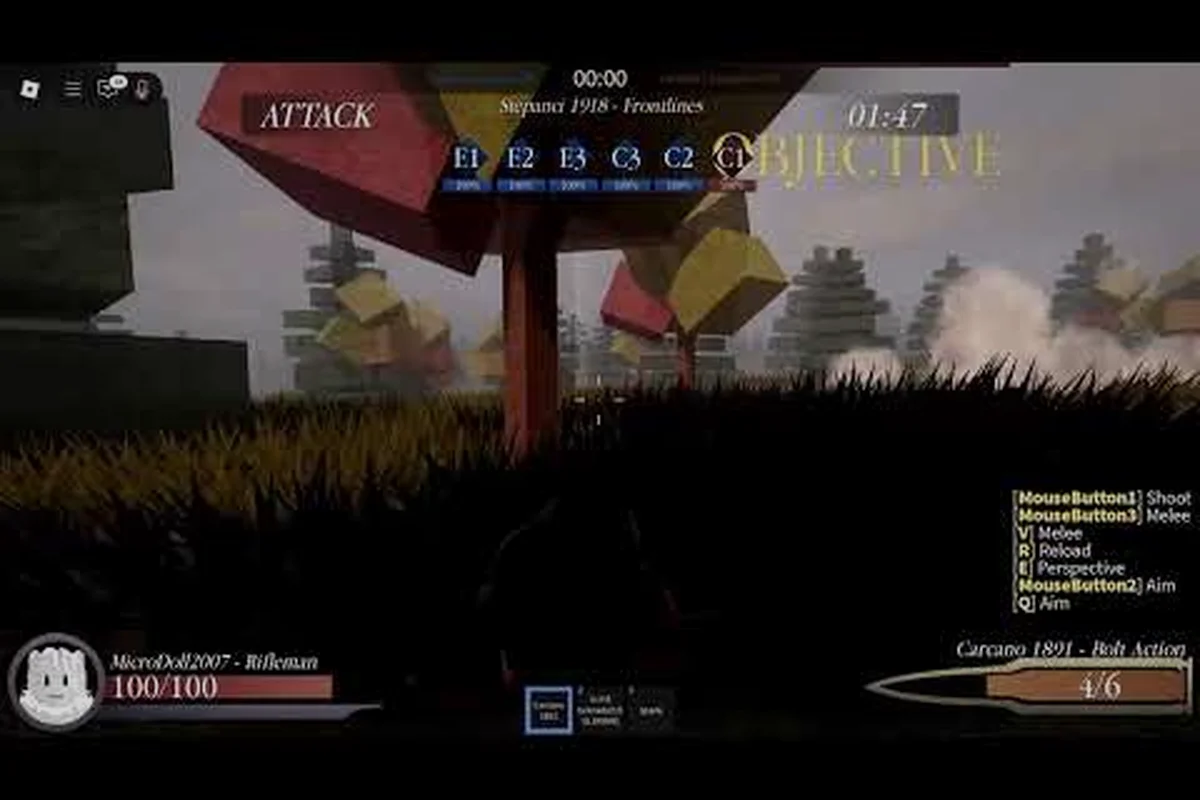
Frontlines is the flagship entrenched turn based mode, and it is where most players learn the entrenched attack and defense fundamentals. The mode splits the match into distinct attack and defense turns, meaning one team pushes while the other holds, then the roles swap after a set period or objective completion. This structure rewards patience and coordination because you cannot simply zerg-rush every objective without considering the turn timer.
The core loop works like this: attackers capture a series of trench lines while defenders try to bleed their tickets dry. Each captured sector extends the match and shifts the front line, which creates a natural ebb and flow that keeps both teams engaged. According to community reports, a full Frontlines match typically lasts between 15 and 25 minutes depending on how evenly matched the squads are, so the entrenched turn based mode demands sustained focus rather than short bursts of action.
Frontlines Turn Structure
The entrenched frontlines rules are straightforward once you understand the turn rotation. Attackers get a limited window to capture the current objective, and if they succeed, the front pushes forward and the timer resets for the next sector. If they fail, the teams swap roles and the former defenders get their chance to push.
| Turn Phase | Attacker Objective | Defender Objective | Typical Duration |
|---|---|---|---|
| Initial Push | Capture first trench line | Hold until timer expires | 3-5 minutes |
| Mid-Match | Break through fortified positions | Counter-push after successful defense | 4-6 minutes |
| Final Stand | Capture last objective | Prevent capture at all costs | 3-5 minutes |
| Role Swap | Defend previous gains | Attack newly opened sectors | Full turn cycle |
The entrenched frontlines rules also include a respawn wave system that staggers when players return to the fight. Attackers respawn in waves to prevent instant zerging, while defenders have shorter respawn timers but fewer total tickets. This asymmetry means attackers must coordinate their pushes around the wave timer, because charging alone into a defended trench line just feeds the defender's kill count.
Attacking in Frontlines
Successful attacks in the entrenched turn based mode require a mix of suppression, flanking, and momentum. The Machine Gunner class excels at pinning defenders behind cover while Assault players push through alternate lanes, and a good Officer can rally the squad for a coordinated charge. Smoke grenades are essential for crossing open ground, because defenders with clear sightlines will shred anyone who tries to sprint across no man's land.
-
Use suppression fire — Machine Gunners force defenders to stay behind cover, creating windows for pushes.
-
Coordinate smoke screens — Drop smoke on known sightlines before committing to a crossing.
-
Flank through trenches — The main lane is a kill zone; use side trenches to approach objectives from unexpected angles.
-
Push with the wave — Time your assault with the respawn wave so you have numerical advantage.
-
Let the Officer lead — The Officer's buffs turn a scattered push into a focused breakthrough.
Defending in Frontlines
Defense in the entrenched attack and defense system is about economy and positioning rather than raw aggression. Every defender kill drains the attacker's tickets, so holding a strong angle and letting the enemy waste lives is often more effective than chasing kills. The Sniper and Machine Gunner classes shine on defense because they can lock down long sightlines, while the Support class keeps the front line supplied with ammo and fortifications.
| Defense Priority | Best Class | Why It Works |
|---|---|---|
| Long-range denial | Sniper | Picks off attackers crossing open ground |
| Lane suppression | Machine Gunner | Prevents pushes through main corridors |
| Close-quarters hold | Flamethrower | Punishes trench-clearing attempts |
| Squad sustain | Medic | Keeps defenders alive during sustained pushes |
The entrenched frontlines rules reward defenders who rotate between positions rather than camping one spot, because attackers will eventually figure out your angle and counter it. Move between firing positions after every few kills, and communicate enemy movements to your squad so everyone adjusts their coverage accordingly.
Conquest: The No-Turn-Timer Tug-of-War
Conquest takes the entrenched attack and defense concept and removes the turn rotation, creating a perpetual tug-of-war where both teams attack and defend simultaneously across multiple objectives. Unlike Frontlines, there is no role swap — your team holds some points while pushing others, which demands a completely different strategic approach. The entrenched conquest rules reward map control and resource allocation over raw combat skill.
The mode features multiple capture points spread across the map, and each held point generates tickets for your team while draining the enemy's. This creates a constant pressure to expand while also protecting what you already control, because losing a point can swing the ticket economy dramatically. The entrenched conquest rules make it the best game mode entrenched for squads that enjoy strategic depth and constant action.
Conquest Capture Mechanics
The entrenched conquest rules use a capture system where points tick up only when you have more players in the zone than the enemy. This means a single defender can stall a capture indefinitely if they stay alive, while a coordinated squad can flip a point quickly with overwhelming numbers. The capture speed scales with the player advantage, so sending five players to capture a point is much faster than sending two.
| Capture State | Player Advantage | Capture Speed | Notes |
|---|---|---|---|
| Neutral | Equal or empty | Slow | First team to enter starts capture |
| Contested | 1-2 extra players | Moderate | Requires sustained presence |
| Dominated | 3+ extra players | Fast | Quick capture but leaves other points exposed |
| Enemy-held | Deficit | No progress | Must eliminate defenders first |
The best game mode entrenched for players who love constant combat is Conquest, because there is never a downtime moment where you wait for a turn to end. The entrenched conquest rules also reward squads that split their forces intelligently — holding two points with small teams while a strike group flips the third objective creates a constant pressure that most enemy teams cannot handle.
Conquest Squad Roles
Because Conquest requires simultaneous attack and defense, squads need to assign specific roles rather than everyone playing the same way. A dedicated defense squad holds the home point and nearby objectives, while an attack squad rotates between enemy-held points looking for weak spots. This division of labor is what separates winning teams from those that just run around chasing kills.
-
Home defense — 2-3 players hold the spawn-adjacent point and respond to flanks.
-
Mid-map control — 2 players contest the center objective to maintain ticket pressure.
-
Attack squad — 3-4 players push enemy-held points in coordinated bursts.
-
Floater — 1 player rotates between points to reinforce weak positions.
The entrenched conquest rules make the best game mode entrenched for squads that communicate well, because the constant objective shifting requires constant callouts about enemy movements and capture status. Teams that stay silent get rolled by organized opponents who know exactly where to apply pressure.
Domination and Team Deathmatch: Faster Alternatives
While Frontlines and Conquest dominate the entrenched modes list, Domination and team deathmatch variants offer faster-paced alternatives for players who want quicker matches. Domination uses a king-of-the-hill format where a single capture point moves around the map after each successful capture, while the entrenched team deathmatch mode strips objectives entirely and focuses purely on eliminations. Both modes still use the entrenched attack and defense framework, but with lighter rules that emphasize combat over strategy.
The entrenched modes list gives players options depending on their mood and available squad size. Domination works well for small groups because the single-point focus creates constant engagement without requiring complex coordination, while the entrenched team deathmatch mode is perfect for warming up aim or testing new loadouts without worrying about objective pressure.
Domination Rules
Domination rotates a single capture point between several preset locations on the map, and the first team to reach the capture threshold wins the match. The entrenched attack and defense dynamic appears in how teams approach each point — one squad pushes to capture while the other defends, then the roles reverse when the point moves. This creates natural attack and defense phases even without a formal turn system.
| Point Location | Typical Engagement Range | Best Classes |
|---|---|---|
| Open Field | Long-range | Sniper, Machine Gunner |
| Trench Complex | Close-quarters | Assault, Flamethrower |
| Building Interior | Mixed | Rifleman, Officer |
| Hillside | Medium-range | Scout, Support |
The entrenched team deathmatch mode, by contrast, removes all objective mechanics and simply awards points for eliminations. While this sounds simpler, the entrenched attack and defense dynamic still emerges organically as teams fight for map control and advantageous positions. The team that holds the strong side of the map typically wins, because they control sightlines and force the enemy to push into disadvantageous fights.
Choosing the Right Mode
The best game mode entrenched for your squad depends on your group size, preferred playstyle, and available time. Frontlines offers the most structured entrenched attack and defense experience with clear turns and objectives, while Conquest provides the deepest strategic layer. Domination and the entrenched team deathmatch mode serve as lighter alternatives when you want faster matches.
| Mode | Match Length | Squad Size | Strategic Depth | Best For |
|---|---|---|---|---|
| Frontlines | 15-25 min | 8+ players | High | Full squads wanting structured play |
| Conquest | 20-30 min | 8+ players | Very High | Teams that love map control |
| Domination | 10-15 min | 4-8 players | Medium | Small groups wanting constant action |
| Team Deathmatch | 8-12 min | Any | Low | Warm-ups and casual play |
The entrenched modes list also includes rotating event modes that appear during special updates, and the developer team at Edot frequently adds new maps and balance changes based on community feedback. Version v1.23 introduced the new Eisstadt map with weather variation plus new skins, which shows the game is actively evolving. If you want to understand how the entrenched attack and defense system works across every mode, check the full game mode breakdown for a comprehensive comparison.
Squad Composition and Class Synergy
The entrenched attack and defense system rewards squads that build balanced compositions rather than stacking the same class. Each of the nine classes fills a specific role, and the best teams ensure they have coverage for every situation. A squad with too many Snipers gets overrun in close-quarters trench fights, while a squad with no Medics bleeds tickets faster than they can replenish.
The class system is the backbone of the entrenched attack and defense experience, because your loadout determines how you approach each objective. The ENTRENCHED class list breaks down every class in detail, but the core principle is simple: balance your squad across range, support, and utility roles.
Core Squad Roles
A well-rounded squad in the entrenched attack and defense system typically includes at least one of each core role. The Rifleman provides reliable mid-range damage, the Assault class leads aggressive pushes, and the Medic keeps everyone alive during sustained fights. The Support class supplies ammo and fortifications, while the Officer coordinates the squad with buffs and rally points.
| Role | Class | Primary Job | Secondary Job |
|---|---|---|---|
| Frontline | Rifleman | Consistent damage | Holding defensive positions |
| Breacher | Assault | Leading pushes | Clearing trenches |
| Sustain | Medic | Healing squad | Reviving downed teammates |
| Firepower | Machine Gunner | Suppression | Area denial |
| Support | Support | Ammo resupply | Building fortifications |
The entrenched attack and defense system also rewards squads that adapt their composition based on the mode and map. Frontlines favors more defensive classes during hold phases, while Conquest needs a balanced mix for simultaneous attack and defense. The best squads communicate before the match starts and adjust their class picks based on the map rotation.
Attack and Defense Loadouts
Your class choice matters less than your loadout decisions within that class, because the entrenched attack and defense system rewards adapting your gear to the situation. Attackers should prioritize mobility and close-range power, while defenders benefit from longer-range weapons and utility items. The difference between winning and losing a push often comes down to whether your loadout matches your role.
-
Attacker loadout priority — Mobility, close-range damage, smoke grenades, melee options.
-
Defender loadout priority — Range, suppression capability, ammo efficiency, fortification tools.
-
Utility items — Smoke for attackers, barbed wire and sandbags for defenders.
-
Weapon choice — Bolt-action rifles for range, SMGs for trench clearing, shotguns for tight corners.
The entrenched attack and defense system also rewards players who switch classes between turns in Frontlines. If you start as a Sniper on defense, consider swapping to Assault when your team gets the attack turn, because the entrenched frontlines rules reward matching your class to your current role. This flexibility is what separates adaptable players from those who stubbornly stick to one class regardless of the situation.
Advanced Strategy: Winning the Attack and Defense Battle
Mastering the entrenched attack and defense system requires more than just understanding the rules — you need advanced strategies that exploit map geometry, timing, and psychological pressure. The best players think several moves ahead, anticipating where the enemy will be and positioning themselves to counter those movements before they happen.
The entrenched attack and defense dynamic rewards teams that control the information war as much as the actual combat. Knowing where the enemy is, what classes they run, and how they tend to play lets you set traps and ambushes that turn the tide of a match. Communication is the single most important tool in your arsenal, because a coordinated squad can dismantle a team of individually better players.
Using Sightlines and Chokepoints to Win Rounds
Map control in the entrenched attack and defense system comes down to understanding sightlines, chokepoints, and flanking routes. Every map has lanes that favor attackers or defenders, and the team that controls these key positions typically wins the round. The new Eisstadt map introduced in v1.23 adds weather variation that changes visibility, which forces players to adapt their positioning on the fly.
| Map Feature | Attacker Value | Defender Value | Key Tactic |
|---|---|---|---|
| Open fields | Low | High | Defenders control sightlines |
| Trench networks | High | Medium | Attackers use cover to advance |
| Elevated positions | Medium | High | Defenders hold high ground |
| Building interiors | High | Low | Attackers clear rooms |
The entrenched attack and defense system also rewards teams that use the environment to their advantage, whether that means digging new trenches to create cover or using existing structures for elevation. The community has documented many creative strategies over time, and the respawn and overtime mechanics guide explains how wave timers affect your push timing.
Timing and Momentum
Timing is everything in the entrenched attack and defense system, because a push that starts too early gets slaughtered while a push that starts too late runs out of time. The best squads build momentum by winning small engagements before committing to the main objective, because each successful skirmish drains enemy tickets and boosts your team's confidence.
-
Win the opening fight — Control the first engagement to establish map presence.
-
Build incremental pressure — Take small objectives before the main push.
-
Recognize enemy weaknesses — Identify which lanes the enemy defends poorly.
-
Exploit ticket advantages — When ahead on tickets, force engagements to drain enemy resources.
-
Save ultimate abilities — Coordinate powerful abilities for the final push rather than wasting them early.
The entrenched attack and defense system also rewards psychological warfare, because a team that feels defeated plays worse. Heavy suppression fire, aggressive flanks, and coordinated charges all create pressure that forces defenders into mistakes. The best teams maintain this pressure consistently rather than letting up after a successful capture, because momentum is hard to build but easy to lose.
Frequently Asked Questions
What is the entrenched attack and defense mode in ENTRENCHED?
The entrenched attack and defense mode refers to the core gameplay loop where one team attacks objectives while the other defends, with roles swapping between turns in Frontlines. This asymmetric structure forces different strategies for each side and is the defining feature of the game's match design.
Which is the best game mode entrenched for new players?
Frontlines is the best game mode entrenched for new players because the turn-based structure clearly separates attack and defense phases, making it easier to learn each role. The entrenched frontlines rules are straightforward, and the match length gives you time to understand the flow without feeling rushed.
How do the entrenched frontlines rules work?
The entrenched frontlines rules split the match into attack and defense turns, where attackers capture trench lines while defenders hold them. If attackers capture the objective, the front pushes forward and the timer resets. If they fail, teams swap roles and the former defenders get their turn to attack.
What are the entrenched conquest rules for capturing points?
The entrenched conquest rules use a capture system where points tick up based on player advantage in the zone. More attackers speed up capture, while defenders can stall progress by staying alive. Teams hold multiple points simultaneously to drain enemy tickets and win the match.
Can I play entrenched team deathmatch mode with a small squad?
Yes, the entrenched team deathmatch mode works well with any squad size because it removes objective mechanics and focuses purely on eliminations. This mode is ideal for warm-ups, testing loadouts, or casual play when you do not have enough players for coordinated objective play.