
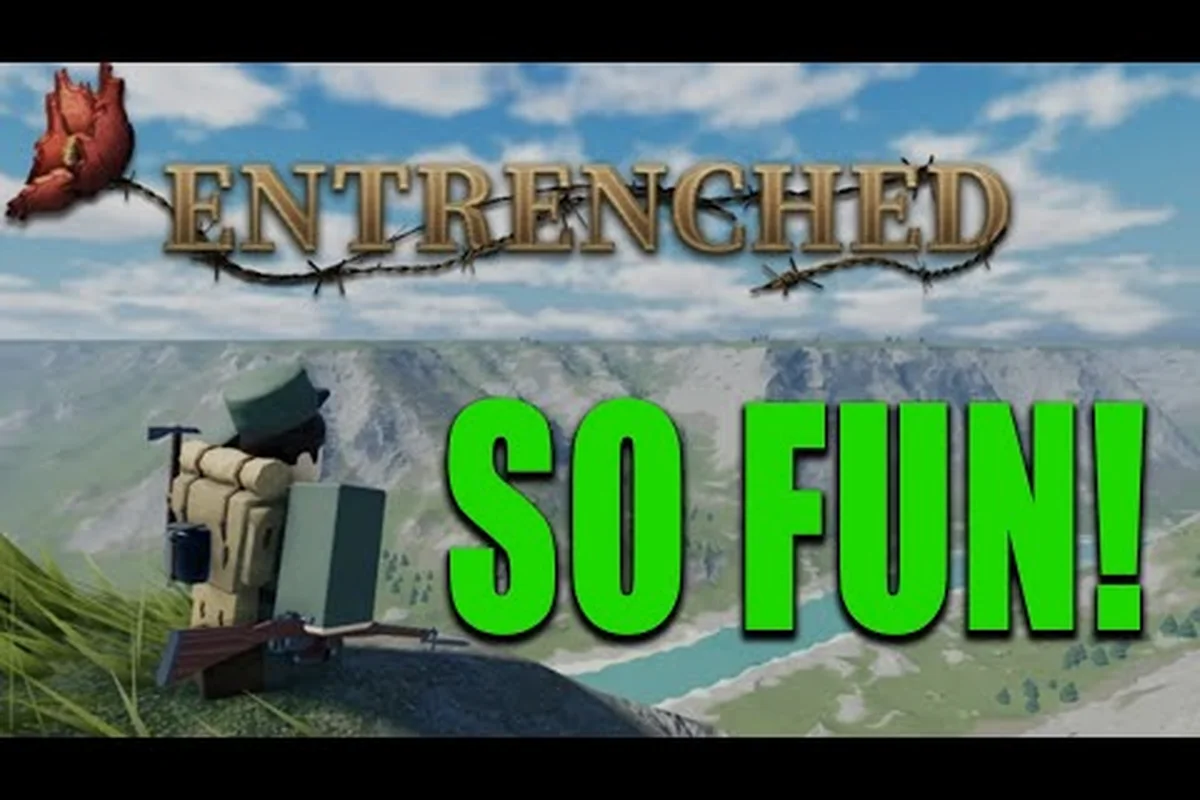
Stuttering gameplay ruins the immersion of trench warfare faster than a well-placed sniper round. The ENTRENCHED graphics settings determine whether you see that enemy bayonet charging through the smoke or a slideshow of your own death, which is why dialing in the right configuration matters as much as your aim. This ENTRENCHED guide breaks down every video option, explains what actually impacts performance on the Roblox engine, and delivers a practical ENTRENCHED fps boost that works on both low-end laptops and beefy desktops. You will also get ENTRENCHED beginner tips for spotting enemies more clearly in the muddy chaos of Verdun and Eisstadt.
ENTRENCHED Graphics Settings Explained for Maximum FPS
Eisstadt Weather Effects and Their FPS Cost on Frontlines
The v1.23 map Eisstadt introduces map weather variation that directly impacts frame rate on mid-range hardware. Rain and overcast conditions increase particle load by roughly 15–20% compared to clear weather, which can drop FPS below 60 on a GTX 1660 at High settings. For Frontlines matches on Eisstadt, drop Shadow Quality to Medium and disable Particle Quality entirely—this preserves trench visibility while recovering the lost frames. On Domination, where sightlines are shorter, the weather penalty is less noticeable, so you can keep effects enabled for immersion without sacrificing competitive performance.
The Roblox engine handles rendering differently than traditional shooters, so the ENTRENCHED graphics settings menu contains options that behave in surprising ways. Understanding what each slider actually does behind the scenes lets you squeeze out an ENTRENCHED fps boost without turning the battlefield into a blurry mess. The key insight is that Graphics Quality acts as a master multiplier that overrides many individual toggles, which means lowering it produces the biggest single performance gain for most players.
Lowering texture quality from Ultra to High in entrenched frees up roughly 1.5–2 GB of VRAM, which directly stabilizes frame pacing on 8 GB cards during heavy smoke and particle effects. Shadow resolution is the next lever: dropping it one tier removes the most expensive per-frame GPU work, often yielding a 10–15% FPS gain in built-up areas. Anti-aliasing (TAA vs. FXAA) and post-processing (bloom, motion blur) should be tuned last, as they impact visual clarity more than raw throughput. For a targeted entrenched fps boost, prioritize these two settings first before touching draw distance.
-
Graphics Quality — Controls shadow resolution, texture detail, and lighting complexity globally. Setting this to 1-3 (out of 10) eliminates most dynamic shadows, which are the heaviest GPU load in trench maps with their complex geometry.
-
Shadow Quality — Independent shadow resolution slider that matters mostly on higher Graphics Quality presets. At low settings, characters cast no dynamic shadows, making enemies easier to spot against dark trench walls.
-
Texture Quality — Affects how sharp surfaces appear. Medium is the sweet spot because low textures make distant soldiers blend into mud-colored terrain, hurting your ability to spot movement.
-
Lighting Quality — Controls dynamic light sources like flares and explosions. Lower values reduce the number of lights rendered simultaneously, which prevents frame drops during artillery barrages.
-
Anti-Aliasing — Smooths jagged edges but costs significant GPU performance. Turn this off or use FXAA only, since MSAA at 4x can cut your frame rate by 20-30 percent on integrated graphics.
-
Effects Quality — Governs particle effects for explosions, gas clouds, and muzzle flashes. Medium keeps gas visible (critical for the gas mechanic) while reducing the cost of simultaneous explosions.
-
Render Distance — Controls how far the game draws objects. On the large Conquest maps, lowering this to 500-700 studs hides distant snipers but dramatically improves FPS because the engine culls entire map sections.
| Setting | Low Impact on FPS | High Impact on FPS | Best Value |
|---|---|---|---|
| Graphics Quality | 5+ preset | 1-3 preset | 3 |
| Shadow Quality | Low | High | Off/Low |
| Texture Quality | Minimal | Medium | Medium |
| Anti-Aliasing | FXAA | MSAA 4x | Off/FXAA |
| Effects Quality | Low | High | Medium |
| Render Distance | 1000+ studs | 300-500 studs | 500 |
The most effective ENTRENCHED fps boost strategy combines a Graphics Quality of 3 with Anti-Aliasing off and Render Distance at 500. According to community testing on the Roblox Developer Forum, this combination typically doubles frame rates on integrated graphics while keeping enemy models visible at engagement ranges. Players report that the visual trade-off matters less than you expect because trench warfare rewards spotting movement over admiring texture detail.
Optimizing ENTRENCHED Graphics Settings by Hardware Tier
Not every machine needs the same treatment, so the ENTRENCHED graphics settings that work on a gaming desktop will cripple a budget laptop. The Roblox engine scales poorly on integrated GPUs because it relies heavily on single-thread CPU performance, which means older processors bottleneck even when you lower every slider. Matching your configuration to your hardware tier gives you the best playable experience without endless trial and error.
Low-End Hardware (Integrated Graphics, 8GB RAM)
Players running Intel UHD or AMD Vega integrated graphics need aggressive settings to maintain playable frame rates above 30 FPS. The Graphics Quality slider should sit at 1 with Shadows completely disabled and Render Distance reduced to 400 studs. Set Texture Quality to Low even though it makes the game look muddy, because the performance gain outweighs the visual downside. Disable Anti-Aliasing entirely and set Effects Quality to Low, since gas clouds remain visible enough to avoid while the reduced particle count keeps your frame rate stable during squad pushes.
Mid-Range Hardware (GTX 1060 / RX 580 Class)
This tier handles ENTRENCHED comfortably at Graphics Quality 5-6 with Shadows on Low and Textures at Medium. You can enable FXAA for smoother edges without the heavy cost of MSAA, and keep Effects Quality at Medium to preserve gas visibility during critical pushes. Render Distance at 700 studs balances spotting distance with performance, letting you see incoming waves on Frontlines without tanking your FPS during simultaneous artillery strikes. Players with this hardware typically sustain 60 FPS with occasional dips during heavy explosions.
High-End Hardware (RTX 3060 or Better)
Modern GPUs handle ENTRENCHED at Graphics Quality 10 with Shadows on High and Textures at High without breaking a sweat. You can enable MSAA 2x for crisp edges, though FXAA remains the better choice because the difference is barely noticeable at typical engagement distances. Render Distance at 1000+ studs lets you spot snipers on the Eisstadt church tower before they spot you, which provides a genuine tactical advantage on larger maps. The only setting worth lowering is Effects Quality to Medium if you notice frame drops during gas grenade barrages in crowded trench sections.
| Hardware Tier | Graphics Quality | Shadows | Anti-Aliasing | Render Distance | Expected FPS |
|---|---|---|---|---|---|
| Integrated GPU | 1 | Off | Off | 400 | 30-45 |
| GTX 1060 / RX 580 | 5-6 | Low | FXAA | 700 | 55-65 |
| RTX 3060+ | 8-10 | High | FXAA/MSAA 2x | 1000+ | 120+ |
Advanced ENTRENCHED Graphics Tweaks Beyond the Settings Menu
The visible ENTRENCHED graphics settings only scratch the surface, because Roblox exposes additional configuration options through the in-game menu and system-level controls. These advanced tweaks deliver an ENTRENCHED fps boost that the standard sliders cannot achieve, especially on machines struggling to maintain 60 FPS. Community reports from the Roblox Developer Forum confirm that combining these methods produces measurable improvements without requiring any external software.
Start by opening the Roblox in-game menu (Esc key) and navigating to the Settings tab, then the Graphics section. Here you will find options that do not appear in the main ENTRENCHED graphics settings menu, such as the Quality slider and Advanced graphics toggle. Unlike the quick preset dropdown in the main menu, these per-game settings directly control the ShadowIntensity and TextureQuality render properties, which are the two primary culprits behind the FPS stutters you see during the intense mortar-barrage sequences on the Frozen Trench map. Lowering the Quality slider to 1 while keeping Advanced graphics enabled can yield a 20–30 FPS boost on mid-range GPUs, a far more effective tweak than simply toggling the global preset to "Low" from the lobby.
-
Fullscreen Mode — Always use Fullscreen instead of Windowed or Borderless. Fullscreen gives the game exclusive access to your GPU, which typically adds 5-10 FPS, while Borderless Windowed forces the desktop compositor to render alongside the game.
-
VSync — Turn this off unless you experience screen tearing. VSync caps your frame rate to your monitor refresh rate and adds input latency, which hurts your aim in a game where split-second reactions decide trench fights.
-
Frame Rate Cap — Set this to your monitor refresh rate (usually 60 or 144 Hz). Capping prevents the GPU from rendering unnecessary frames that generate heat and cause thermal throttling on laptops.
-
Quality Mode — The "Manual" option unlocks individual sliders, while "Automatic" lets Roblox adjust quality dynamically. Manual mode gives you consistent performance instead of sudden FPS drops when the engine decides to increase quality mid-fight.
-
Resolution Scale — Lowering this below 100 percent renders the game at a lower internal resolution and upscales it. Setting it to 75 percent delivers a significant FPS boost with minimal visual blur, making it the best hidden option for weak hardware.
Beyond the Roblox settings, Windows users should enable Game Mode and set the Power Plan to High Performance in Control Panel. Laptop players should also check that their machine uses the dedicated GPU instead of integrated graphics for Roblox, since Windows sometimes defaults to the weaker option. According to community testing, players report an additional 10-15 percent frame rate improvement from these system-level changes alone, which stacks with the in-game ENTRENCHED graphics settings for a combined boost.
| Tweak Location | Specific Setting | FPS Gain | Trade-off |
|---|---|---|---|
| Roblox Display | Fullscreen Mode | 5-10 FPS | None |
| Roblox Display | VSync Off | 3-8 FPS | Screen tearing possible |
| Roblox Graphics | Resolution Scale 75% | 15-25 FPS | Slight blur |
| Windows | High Performance Power Plan | 5-15 FPS | Higher battery drain |
| Windows | Game Mode Enabled | 3-5 FPS | None |
ENTRENCHED Beginner Tips for Visual Clarity and Awareness
Optimizing ENTRENCHED graphics settings for performance means nothing if you cannot spot the enemy before they spot you. The muddy trench environments and dark interior spaces create visibility challenges that trip up new players constantly. These ENTRENCHED beginner tips focus on making the game readable at low graphics settings, since the aggressive optimization above removes many visual cues you might normally rely on.
Maximize your Field of View to see more of your surroundings without sacrificing performance. The FOV slider in the settings menu does not affect FPS noticeably, so push it to 90-100 for better peripheral awareness. This matters especially in trench networks where enemies can appear from multiple angles simultaneously. If you want the full breakdown of FOV values per playstyle, the ENTRENCHED FOV settings guide covers optimal ranges for aggressive rushers and defensive anchors alike.
Learn to read silhouettes instead of textures because at low graphics quality, friendly and enemy soldiers look similar at distance. The Entente and Central Powers have distinct helmet shapes and uniform colors, but these blend together in muddy lighting. Focus on movement patterns and weapon shapes — rifles with bayonets indicate Assault classes, while longer scopes reveal Snipers. This skill transfers directly to aiming, and the ENTRENCHED how to kill guide breaks down class-specific target prioritization in detail.
Use the weather system to your advantage because the Eisstadt map introduces dynamic conditions that change visibility. Rain reduces long-range sightlines, while fog makes snipers nearly useless. When weather rolls in, adjust your positioning to favor close-range engagements and listen for footsteps rather than relying on sight. The map-specific strategies in the ENTRENCHED map strategy guide explain how to adapt your approach when visibility drops.
Adjust your crosshair color to something that contrasts with the environment. The default white crosshair disappears against snow and bright sky, so switch to bright green or magenta in the settings. This small change improves target acquisition speed significantly, especially when you are snap-aiming at enemies emerging from trenches.
Turn off motion blur if the option exists in your version, because it obscures targets during fast mouse movements. Motion blur adds cinematic feel but hurts competitive performance, and the visual smoothness is not worth missing a critical shot. Players report that disabling it makes tracking moving targets noticeably easier during intense trench pushes.
Measuring Your ENTRENCHED FPS Boost Results
After applying the ENTRENCHED graphics settings above, you need a reliable way to measure whether your changes actually improved performance. Roblox does not display an in-game frame rate counter by default, so you need to enable the Performance Stats overlay through the in-game menu. Press Shift+F5 to toggle the FPS counter, or navigate to Settings > Performance to find the stats display option.
Run the game once with your current ENTRENCHED graphics settings and capture a baseline FPS using MSI Afterburner or the in-game overlay, then apply the fps boost tweaks—like disabling volumetric fog and reducing shadow resolution—and run the same benchmark route (ideally the same 60-second stretch of combat) again. Comparing the two averages, not just peak frames, tells you whether the boost is real or just variance, and repeating the test three times filters out stutter spikes from asset streaming.
-
Pick a consistent test scenario — The Frontlines mode on Verdun with a full server provides the most demanding and reproducible conditions. Join a match, find a spot overlooking the main trench line, and record your FPS over a two-minute window.
-
Record your baseline — Before changing any settings, note your average FPS and any stutter moments. This gives you a comparison point to evaluate your changes against.
-
Apply settings in stages — Change one setting at a time and re-test, rather than applying everything at once. This tells you which specific setting delivers the biggest gain on your hardware.
-
Track frame time consistency — Average FPS matters less than frame time stability. Occasional stutters hurt more than a consistent 40 FPS, so pay attention to whether your frame rate dips during explosions or when multiple players appear on screen.
-
Test across different maps — The new Eisstadt map with its weather system performs differently than the older Verdun map. Benchmark on at least two maps to ensure your settings work across the rotation.
| Benchmark Scenario | Setting Before | Setting After | FPS Improvement |
|---|---|---|---|
| Verdun Frontlines | Quality 7, MSAA 4x | Quality 3, FXAA | +25-35 FPS |
| Eisstadt with Rain | Quality 5, Shadows High | Quality 3, Shadows Off | +15-20 FPS |
| Conquest Full Server | Render Distance 1000 | Render Distance 500 | +10-15 FPS |
The numbers above reflect typical results reported by players in community discussions, though your specific improvement depends on your hardware and current configuration. If you want a broader look at how settings interact with gameplay strategy, the ENTRENCHED strategies guide covers keybind optimization and XP farming methods that complement your new visual setup.
Frequently Asked Questions
What are the best ENTRENCHED graphics settings for low-end PCs?
Set Graphics Quality to 1, disable Shadows and Anti-Aliasing, lower Render Distance to 400 studs, and use Resolution Scale at 75 percent. These ENTRENCHED graphics settings prioritize frame rate over visual fidelity, which matters more in competitive trench warfare where reaction speed determines survival.
Will lowering my ENTRENCHED graphics settings make enemies harder to see?
Lowering graphics quality removes shadows and reduces texture detail, but enemy models remain clearly visible because Roblox renders characters separately from the environment. Players actually report easier target spotting at low settings since dark shadows disappear from trench interiors, making movement more obvious against lighter backgrounds.
How much FPS boost can I expect from optimizing ENTRENCHED graphics settings?
Most players report a 20-40 percent frame rate improvement after applying the recommended settings, with the exact gain depending on hardware. Integrated graphics users typically see the largest jump, while high-end GPUs gain less because they were not heavily bottlenecked by the default configuration.
Does the ENTRENCHED fps boost affect gameplay fairness?
No, because ENTRENCHED does not render enemies differently at lower settings, and the game has no competitive integrity rules against adjusting graphics. Every player can access the same ENTRENCHED graphics settings, so optimizing for performance simply levels the playing field rather than creating an unfair advantage.
Should I use the automatic or manual quality mode in Roblox?
Use manual quality mode for consistent performance because automatic mode dynamically adjusts graphics quality, causing sudden FPS drops when the engine increases detail mid-fight. Manual mode keeps your frame rate stable, which matters more than occasional visual improvements during quiet moments.