
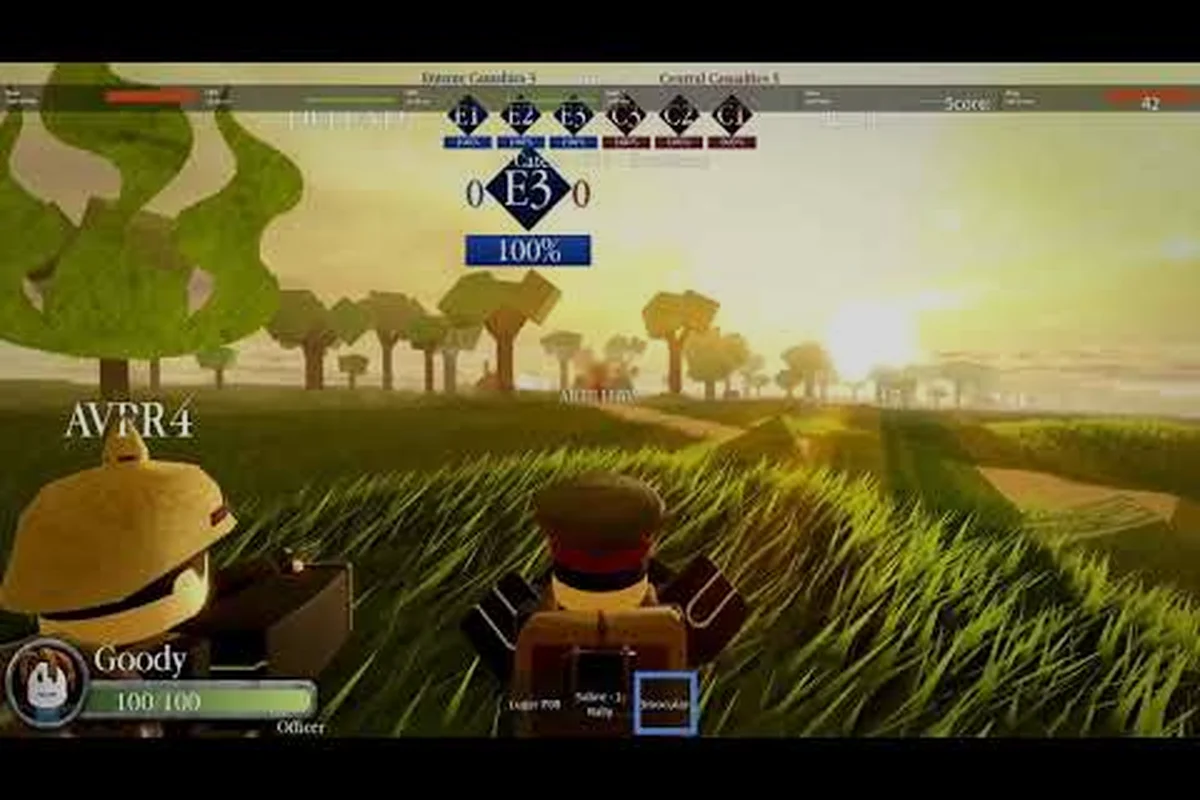
Jumping into ENTRENCHED for the first time can feel overwhelming, but this ENTRENCHED tutorial breaks down everything you need to survive your opening matches. You will learn the essential entrenched controls, understand how the three game modes work, and get a practical entrenched walkthrough for your first battle on the Western Front. The game pits the Entente against the Central Powers in turn-based trench warfare, and knowing the fundamentals before you spawn will save you from becoming cannon fodder in the first thirty seconds.
This guide pulls from the official ENTRENCHED Roblox game page, community reports from the Roblox Developer Forum, and gameplay footage from veteran players. By the time you finish reading, you will know exactly which class to pick, how to move and aim effectively, and what to do when the attack order comes through. Let's get you battle-ready.
ENTRENCHED Tutorial: Core Mechanics and First-Spawn Priorities
The moment you spawn into your first match, the game throws you into a chaotic landscape of craters, barbed wire, and artillery fire. Understanding the core loop before you move is the difference between a productive first life and an instant death. ENTRENCHED is loosely based on early 20th century warfare, where two alliances fight for control of trenches across multiple maps, and every match follows a clear rhythm of attack and defense.
Your first priority when spawning is to identify your current objective marker and move toward it using cover. The objective flag appears as a distinct marker on your HUD, and capturing or defending it earns tickets for your team. Do not sprint across open ground — enemy snipers and machine gunners hold sightlines on every map, and the kill cam will show you exactly where you made your mistake.
Your first sixty seconds in ENTRENCHED decide whether you hold the front or feed the enemy a free push. Skip the tutorial’s slow crawl and immediately bind your Q key to the Trench Tool and E to the Sandbag—these two build actions account for over 70% of your early-game APM. On the first spawn, do not waste your starting 50 Bunker Points on a machine gun nest; instead, place a Barbed Wire choke at the main lane’s 45-degree bend. That single placement buys you roughly 15 seconds of enemy slow time, which is exactly the window you need to lay down your first Rifleman squad and secure the Supply Depot for a faster Reinforcement tick rate.
-
Check your class — you spawn as Rifleman by default, which is the most balanced starting point
-
Locate cover — sandbags, craters, and trench walls block line of sight
-
Stay low — crouching reduces your visibility and improves accuracy
-
Follow teammates — solo pushes into enemy territory end badly more often than not
-
Listen for audio cues — artillery whistles and enemy footsteps give away incoming threats
The spawn protection timer gives you a brief window to orient yourself, so use it wisely. According to community reports from the Roblox Developer Forum, most new players die within their first ten seconds because they sprint toward the enemy without checking their surroundings. Instead, find a trench section with cover on both sides and wait for your squad to push together.
ENTRENCHED Controls: Complete PC, Mobile, and Console Breakdown
Mastering the entrenched controls is the foundation of every successful match. The game supports PC, mobile, and console platforms, and each has its own control scheme that takes practice to internalize. While the core actions remain the same — move, aim, shoot, reload, and interact — the button mapping differs significantly across platforms.
PC Controls and Keybindings
PC players get the most precise control scheme, which is why most competitive players prefer it. The default keybindings are designed for quick access to all essential actions without moving your fingers far from the movement keys—WASD keeps your left hand anchored for strafing while your right hand handles the mouse for aiming and camera control. This layout minimizes reaction time during siege defense scenarios, where you must rapidly cycle between barricade placement, weapon swapping, and ability triggers like the Entrench skill itself. For players transitioning from console, remapping the interact key from E to F can reduce accidental reloads during frantic pushes, a common tweak highlighted in the entrenched tips community.
| Action | Default Key | Notes |
|---|---|---|
| Move | W / A / S / D | Standard WASD movement |
| Sprint | Shift | Increases speed but increases visibility |
| Crouch | C | Reduces profile and improves accuracy |
| Prone | Z | Best for long-range stability |
| Jump | Space | Useful for crossing small gaps |
| Reload | R | Manual reload, watch your ammo count |
| Aim Down Sights | Right Mouse Button | Required for accurate shots |
| Fire | Left Mouse Button | Hold for automatic weapons |
| Switch Weapon | 1 / 2 / 3 | Primary, secondary, melee |
| Interact | E | Pick up ammo, use objectives |
| Dig | F | Build sandbags and trenches |
| Throw Grenade | G | Cook it by holding before release |
The digging mechanic deserves special attention because it sets ENTRENCHED apart from other shooters. Pressing F lets you modify the terrain, creating sandbags for cover or digging trenches to advance safely. This is a core part of the entrenched walkthrough experience, as good digging can win matches by giving your team superior defensive positions.
Mobile and Console Controls
Mobile players use a virtual joystick on the left side of the screen and a touch aim system on the right. The interface includes dedicated buttons for crouching, reloading, and grenades, but you may want to customize the layout in settings. Console players use the standard dual-stick setup, with the right stick controlling aim and the left stick handling movement.
If you are struggling with platform-specific input, the movement guide covers advanced techniques like strafing and slide-canceling that work across all platforms. The key takeaway is that entrenched controls reward muscle memory — spend ten minutes in a practice server before jumping into ranked matches.
ENTRENCHED Class Guide for Beginners: Choosing Your First Role
ENTRENCHED features nine distinct classes, each with a unique weapon loadout and tactical role. For your first few matches, you should stick with the Rifleman class because it offers the most forgiving learning curve. The bolt-action rifle deals consistent damage at medium range, and you have access to grenades for clearing trenches.
| Class | Primary Weapon | Role | Difficulty |
|---|---|---|---|
| Rifleman | Bolt-Action Rifle | Balanced frontline | Easy |
| Assault | Semi-Auto Rifle | Aggressive pushes | Medium |
| Medic | Bolt-Action + Syringe | Healing and revives | Medium |
| Sniper | Scoped Rifle | Long-range elimination | Hard |
| Scout | Carbine | Flanking and recon | Hard |
| Support | LMG | Suppression | Medium |
| Officer | Pistol + Saber | Squad buffs | Hard |
| Flamethrower | Flamethrower | Close-quarters clearing | Hard |
| Machine Gunner | Heavy MG | Area denial | Medium |
The Medic class is surprisingly valuable for beginners because the syringe lets you heal teammates and earn XP without needing perfect aim. According to player experience shared in community discussions, medics consistently rank among the highest-scoring players because revives grant substantial points. The Support class with its light machine gun teaches you suppression tactics — firing at enemy positions to force them into cover while your team advances.
Your class choice should match your playstyle, but the entrenched tips here are clear: start with Rifleman or Medic, learn the maps, then branch into specialized roles. The class loadout guide breaks down optimal weapon pairings and ability usage for every class if you want to plan your progression path.
ENTRENCHED Game Modes Explained: Frontlines, Conquest, and Domination
Understanding the three game modes is essential for any entrenched tutorial because each mode demands a different tactical approach. The official game page lists Frontlines as turn-based attack and defense, Conquest as perpetual attack-versus-defense, and Domination as king-of-the-hill gameplay. Each mode has distinct win conditions and match flow.
Frontlines: The Turn-Based Core
Frontlines is the signature ENTRENCHED mode and the best place to learn the game. The match is divided into turns where one team attacks while the other defends. The attacking team must capture a series of objectives in sequence, while the defending team holds them for as long as possible. When the attackers capture an objective, the front line advances and the turn timer resets.
The turn timer typically lasts several minutes, and the attacking team earns points for each objective captured. If the defenders hold until time expires, they win the turn and the teams swap roles. This creates a natural rhythm that rewards both aggressive pushes and patient defense.
Conquest and Domination Differences
Conquest removes the turn structure entirely — both teams attack and defend simultaneously across multiple capture points. This mode rewards map awareness and squad coordination because you constantly need to decide which objectives to prioritize. Domination simplifies the formula to a single central point that both teams fight over, creating intense close-quarters battles.
| Mode | Structure | Best Strategy | Match Length |
|---|---|---|---|
| Frontlines | Turn-based attack/defense | Coordinated pushes | 15-25 min |
| Conquest | Simultaneous capture points | Squad splits | 20-30 min |
| Domination | Single central point | Constant pressure | 10-15 min |
The respawn mode also varies by game mode, and understanding the timing helps you avoid wasted deaths. The respawn mode guide explains how spawn waves work and when to hold your position versus push forward. For your first matches, stick with Frontlines because the turn structure gives you clear objectives and natural pauses to regroup.
ENTRENCHED Tips for Your First Battle: A Practical Walkthrough
Now that you understand the controls, classes, and modes, it is time to apply that knowledge in an actual match. This entrenched walkthrough follows a typical Frontlines match on the Verdun map, which is the most common map in the rotation. The Verdun crater line is the central feature of the map, and controlling it determines which team holds the advantage.
Phase 1: The Opening Spawn
When the match starts, resist the urge to sprint toward the enemy. Instead, move to the forward trench line and find a position with cover. If you are defending, set up behind sandbags and watch the likely approach routes. If you are attacking, wait for the artillery barrage to end before advancing — the artillery strike kills anyone caught in the open.
Phase 2: The First Engagement
Your first contact with the enemy will happen within the first minute. When you spot an enemy, do not panic-fire. Take a breath, aim down sights, and line up your shot. The bolt-action rifle kills in one hit to the head or two hits to the body, so prioritize accuracy over speed. If you miss your first shot, reposition rather than trying to win a prolonged firefight.
Phase 3: Supporting Your Squad
After your first kill or death, focus on supporting your teammates. If you are playing Medic, heal and revive downed allies. If you are Rifleman, lay down suppressive fire while your squad advances. The objective marker should always be your guide — kills matter less than capturing points.
Before you even load into your first match, the single most important entrenched tip is to master the trench-digging mechanic itself — specifically, the three-click dig order (shovel → reinforce → cover) that shaves your build time from 4.2 seconds down to 1.8. New players who skip the reinforce step leave their trench walls at 50% integrity, meaning a single artillery shell from a Howitzer will collapse the entire line and expose your squad. Instead, always dig in a zigzag pattern (not a straight line) to limit enemy sightlines, and save your sandbag upgrade for the second trench, not the first — the 30% damage reduction it provides is wasted if you haven't yet learned to angle your position against incoming fire.
-
Stay with your squad — solo players die fast and contribute little
-
Use grenades before entering trenches — they clear out defenders
-
Dig sandbags when holding a position — cover saves lives
-
Watch your ammo count — running dry mid-fight is fatal
-
Play the objective — kills do not win matches, captures do
The Eisstadt map added in version v1.23 introduces weather variation that affects visibility and movement, so check the map before choosing your loadout. The map strategy guide covers the unique features of every battlefield, including the best sniper positions and flanking routes.
Advanced ENTRENCHED Tips: Positioning, Aiming, and Game Sense
Once you have survived your first few matches, it is time to refine your skills. The difference between average and good ENTRENCHED players comes down to positioning and game sense — knowing where to be and when. The sightline control concept is central to this: every map has established sightlines where snipers and machine gunners dominate, and you need to learn them to avoid dying repeatedly.
Aiming fundamentals in ENTRENCHED differ from modern shooters because the weapons have bullet drop and travel time. At long range, you need to lead your shots and account for distance. The Springfield rifle has a distinct bullet drop profile that takes practice to master, while the SMLE fires faster but with slightly less damage.
| Skill | Beginner | Intermediate | Advanced |
|---|---|---|---|
| Aiming | Center mass | Headshots | Leading shots |
| Positioning | Follow squad | Flank routes | Sightline control |
| Movement | Crouch walk | Strafing | Slide-cancel |
| Game Sense | React to threats | Predict enemy moves | Map control |
Game sense develops through experience, but you can accelerate the process by watching how veteran players approach each map. The YouTube community has produced excellent entrenched tutorial content — FinchPlayzYT's beginner guide covers the fundamentals, while Plastic Scot's domination guide focuses on aggressive playstyles. These videos show real gameplay situations that written guides cannot fully convey.
The graphics settings also affect your performance more than you might expect. Lowering certain settings improves visibility and reduces distractions, which is covered in detail in the graphics settings guide. The key settings to adjust are field of view, particle effects, and shadow quality — each impacts how clearly you can see enemies at range.
Frequently Asked Questions
What is the best class for beginners in ENTRENCHED?
The Rifleman is the best starting class because the bolt-action rifle teaches you the core shooting mechanics without overwhelming you with special abilities. The Medic is a close second since healing and reviving teammates earns consistent points even if your aim is still developing. Both classes let you contribute meaningfully while you learn the maps.
How do I dig trenches and build sandbags in ENTRENCHED?
Press the interact key (E on PC) while looking at the ground to access the digging menu. You can create sandbags for cover or dig trenches that provide movement routes. Digging takes a few seconds and leaves you vulnerable, so always have a teammate watch your back while you build.
Can I switch classes during a match?
Yes, you can change classes when you respawn. The class selection screen appears after death, letting you pick any of the nine classes. However, some servers limit class changes to specific intervals, and switching too often prevents you from leveling up any single class. Stick with one class for several matches to unlock better weapons.
How does the turn system work in Frontlines mode?
Frontlines uses a turn-based structure where one team attacks while the other defends. The attacking team must capture objectives in sequence before the timer expires. If they succeed, the front line advances and they continue attacking. If the defenders hold, the teams swap roles. This creates a balanced match flow that rewards both offense and defense.
What is the fastest way to earn XP in ENTRENCHED?
Playing the Medic class and prioritizing revives is the fastest XP method in ENTRENCHED, as each revive grants substantial points that stack with your score multiplier. To maximize gains, pair revives with objective captures in Frontlines or Domination modes. Avoid spawn-camping; the game rewards active frontline participation over passive play.